From Access to Impact: Advancing Parliamentary Openness in Africa Through Continuous Engagement
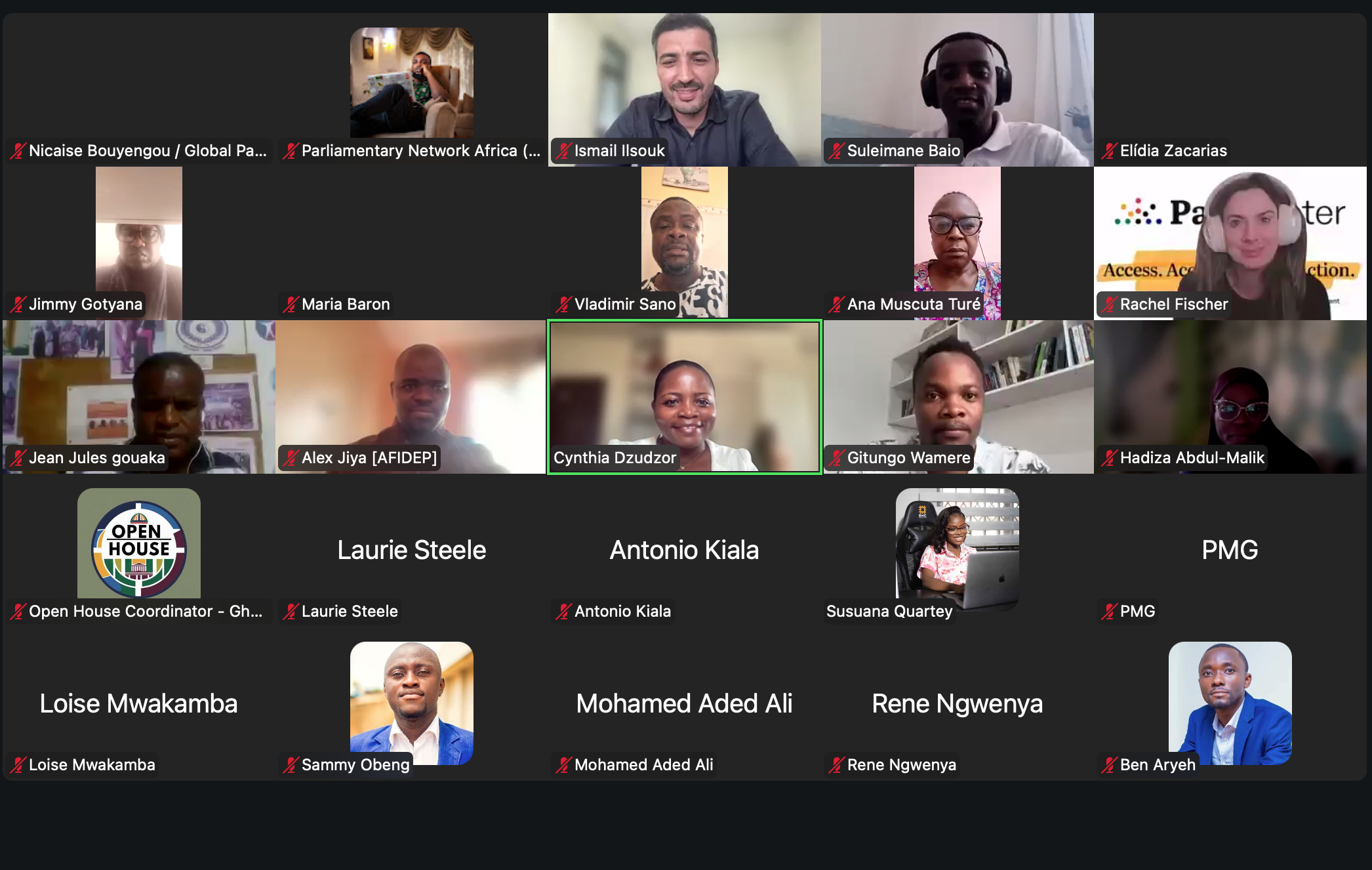
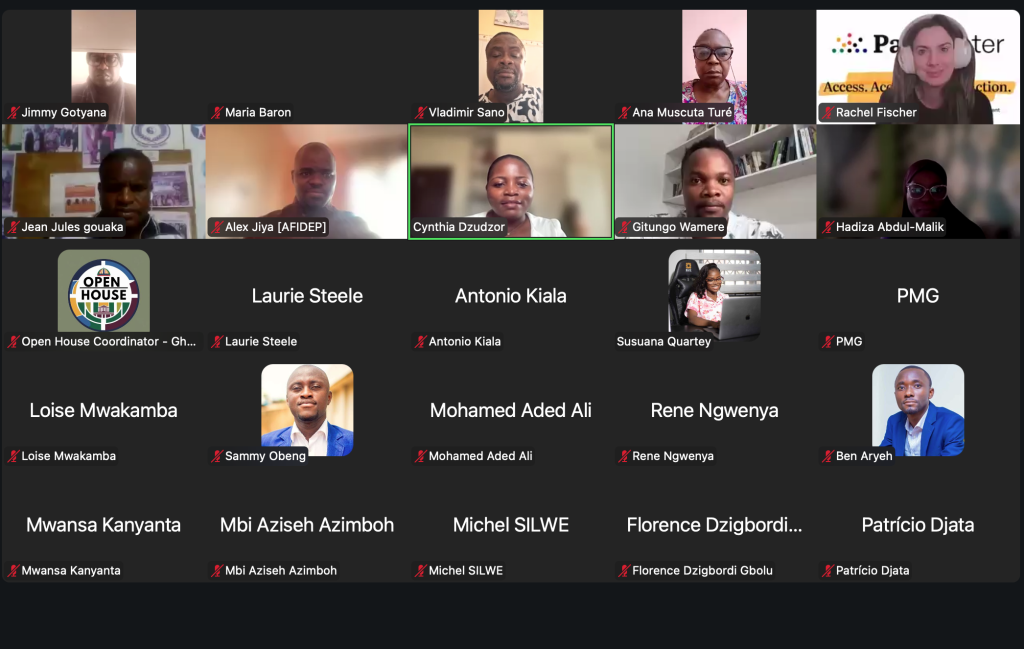
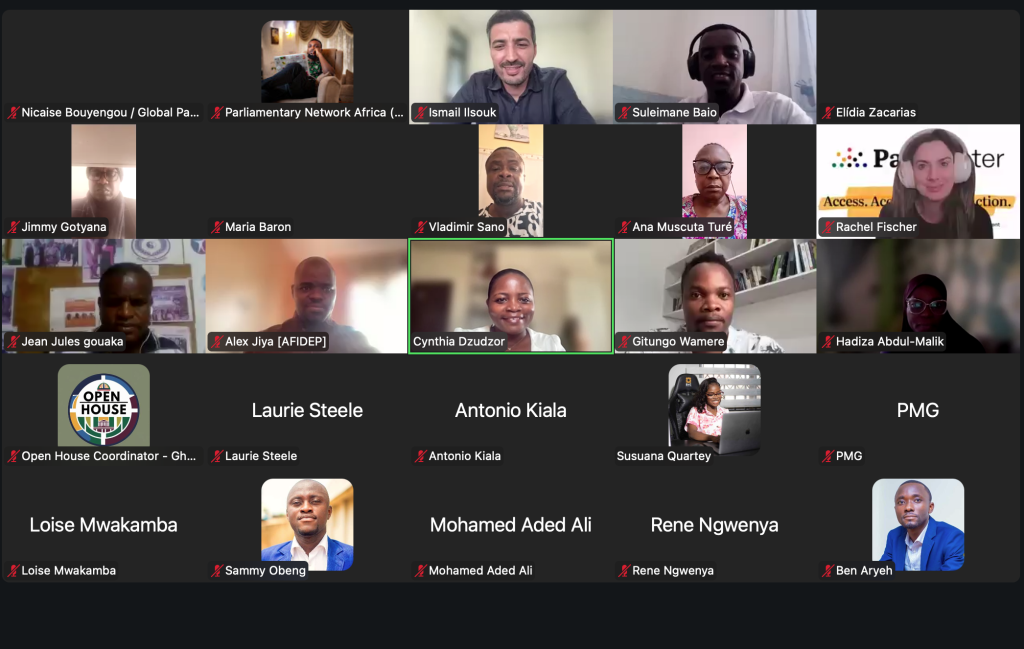
On 23rd April 2026, the Africa Parliamentary Monitoring Organizations Network (APMON) convened the first session of its newly established monthly webinar series, marking a significant step toward sustained, continent-wide dialogue on parliamentary transparency and accountability. Held virtually, the session brought together 39 participants, including Parliamentary Monitoring Organizations (PMOs), civil society actors, and civic tech practitioners, all united by a shared goal: strengthening democratic governance across Africa.
The webinar, themed “Access to Information, Legislative Transparency, and Open Data Ecosystems,” was not just a knowledge-sharing exercise, it was a deliberate response to a longstanding gap. As highlighted during the recent APMON Conference in Pretoria, annual convenings alone are insufficient to address the complex and evolving challenges facing parliamentary openness. This new series aims to provide continuity, deepen reflection, and foster practical collaboration.
Setting the Tone: From Principles to Practice

In his opening remarks, APMON Secretary-General Mr. Sammy Obeng underscored the centrality of access to information (ATI) in democratic governance:
“Access to information is not merely a procedural right—it is the foundation upon which accountability is built.”
He challenged participants to move beyond rhetoric and ensure that legislative transparency is not only upheld as a principle but practiced in ways that are inclusive, accessible, and responsive to citizens’ needs. He also pointed to the Open Parliament Index (OPI) as a critical tool for benchmarking progress and driving reform across African parliaments.
Civic Tech and the Promise of Participation
The keynote presentation by Mr. Ismail Ilsouk, Executive Director of SimSim-Participation Citoyenne (Morocco), offered a grounded and practical perspective on how civic technology can bridge the gap between citizens and legislatures.
Through platforms such as Nouabook, Nusharik, and the Article 27 Platform, participants saw how digital tools can:
• Connect citizens directly with Members of Parliament,
• Translate advocacy into legislative proposals, and
• Track institutional responsiveness to information requests.
Yet, the presentation carried a crucial caution:
“Civic tech tools are only effective when complemented by citizen awareness and offline engagement strategies.”
This insight resonated strongly with participants, reinforcing the idea that technology alone cannot fix systemic governance challenges, it must be embedded within broader ecosystems of participation and accountability.

The Reality of Access to Information
While Morocco’s adoption of an ATI law in 2018 (operationalized in 2020) represents progress, its implementation reveals familiar challenges across the continent:
• High non-response rates (approximately 45%),
• Weak enforcement mechanisms,
• Overuse of exemptions, and
• Limited monitoring systems.
The conclusion was unequivocal: legal frameworks, while necessary, are insufficient without enforcement and institutional accountability.
This theme echoed throughout the session, reflecting a broader continental pattern where laws exist on paper but fall short in practice.
Legislative Transparency: Progress with Gaps
Participants noted that while some parliaments demonstrate proactive disclosure such as publishing draft laws and legislative reports, significant transparency gaps remain. These include:
• Limited visibility into committee proceedings,
• Absence of named voting records, and
• Technical complexity that renders information inaccessible to ordinary citizens.
As one key takeaway emphasized, transparency must not only exist, it must be understandable and usable.
Open Data: Moving Beyond Access
A critical distinction emerged between access to information and open data. While ATI focuses on the right to request information, open data requires that information be:
• Structured,
• Machine-readable, and
• Easily reusable.
Current practices, however, often fall short. Data is frequently published in static formats such as PDFs, limiting its usability and impact. This underscores the need for a cultural and institutional shift toward more robust data ecosystems.
The Political Economy of Transparency
The webinar also examined the role of the Open Government Partnership (OGP) in advancing transparency. While OGP has created valuable advocacy entry points and improved commitments on paper, its impact is constrained by:
• Limited political will,
• Weak integration of civil society input, and
• The risk of symbolic, rather than substantive, reforms.
This led to a sobering but realistic conclusion: without genuine political commitment, even the best frameworks will underperform.
Voices from Fragile Contexts
A powerful intervention from a participant in Guinea-Bissau highlighted the compounded challenges in fragile and transitional states where political instability, weak institutions, and limited access to parliamentary information create significant barriers to openness.
This raised a critical question for the network:
How can parliamentary openness be advanced in contexts where governance structures themselves are unstable?
A Shared Reality, A Collective Response
Despite the diversity of national contexts, several common challenges emerged:
• Weak implementation of ATI laws,
• Limited citizen understanding of parliamentary processes,
• Low institutional responsiveness,
• Underdeveloped open data ecosystems, and
• Language barriers affecting inclusivity.
In response, APMON reaffirmed its commitment to supporting organizations across varying contexts, particularly those operating in challenging environments. The importance of peer learning, regional solidarity, and knowledge exchangewas repeatedly emphasized.
From Discussion to Action
The webinar concluded with a set of clear, actionable priorities:
• Strengthening legislative engagement through citizen participation,
• Improving ATI systems and public awareness,
• Advocating for deeper parliamentary transparency (including voting records),
• Promoting machine-readable open data standards, and
• Leveraging OGP commitments for meaningful reform.
Operational improvements were also identified, including the need for multilingual accessibility and broader participation.
Bridging the Gap Between Frameworks and Reality

In her closing remarks, moderator Ms. Cynthia Dzudzor reflected on the central theme that ran through the session:
“Today’s discussions have reaffirmed that access to information, legislative transparency, and open data ecosystems are critical pillars of democratic governance, but their impact depends on how effectively they are implemented.”
She encouraged participants to remain engaged beyond the webinar, emphasizing that sustained collaboration is key to advancing the network’s shared vision.
Looking Ahead
The inaugural webinar successfully laid the foundation for a continuous, action-oriented platform on parliamentary openness in Africa. It reinforced a critical insight:
The challenge is no longer just about creating frameworks, it is about making them work.
As APMON moves forward with its webinar series, the focus will increasingly shift toward practical, context-driven solutions, ensuring that transparency is not only promised, but delivered in ways that empower citizens and strengthen democratic institutions across the continent.